
If you're researching epoxy flooring, the first question on your mind is probably: how long will it actually last? You'll find answers ranging from "a few years" to "forever" depending on who you ask. The truth — like most things worth knowing — lives somewhere in between and depends almost entirely on how the floor is installed.
Here's the honest answer from a contractor who installs epoxy flooring every day: a professionally installed epoxy floor will last 15 to 20+ years with proper maintenance. Some commercial systems we've installed are still performing flawlessly after two decades. On the other hand, a poorly installed epoxy floor can start peeling within six months. The difference isn't the product — it's the process.
A professionally installed epoxy floor will last 15 to 20+ years with proper maintenance. The difference isn't the product — it's the process.
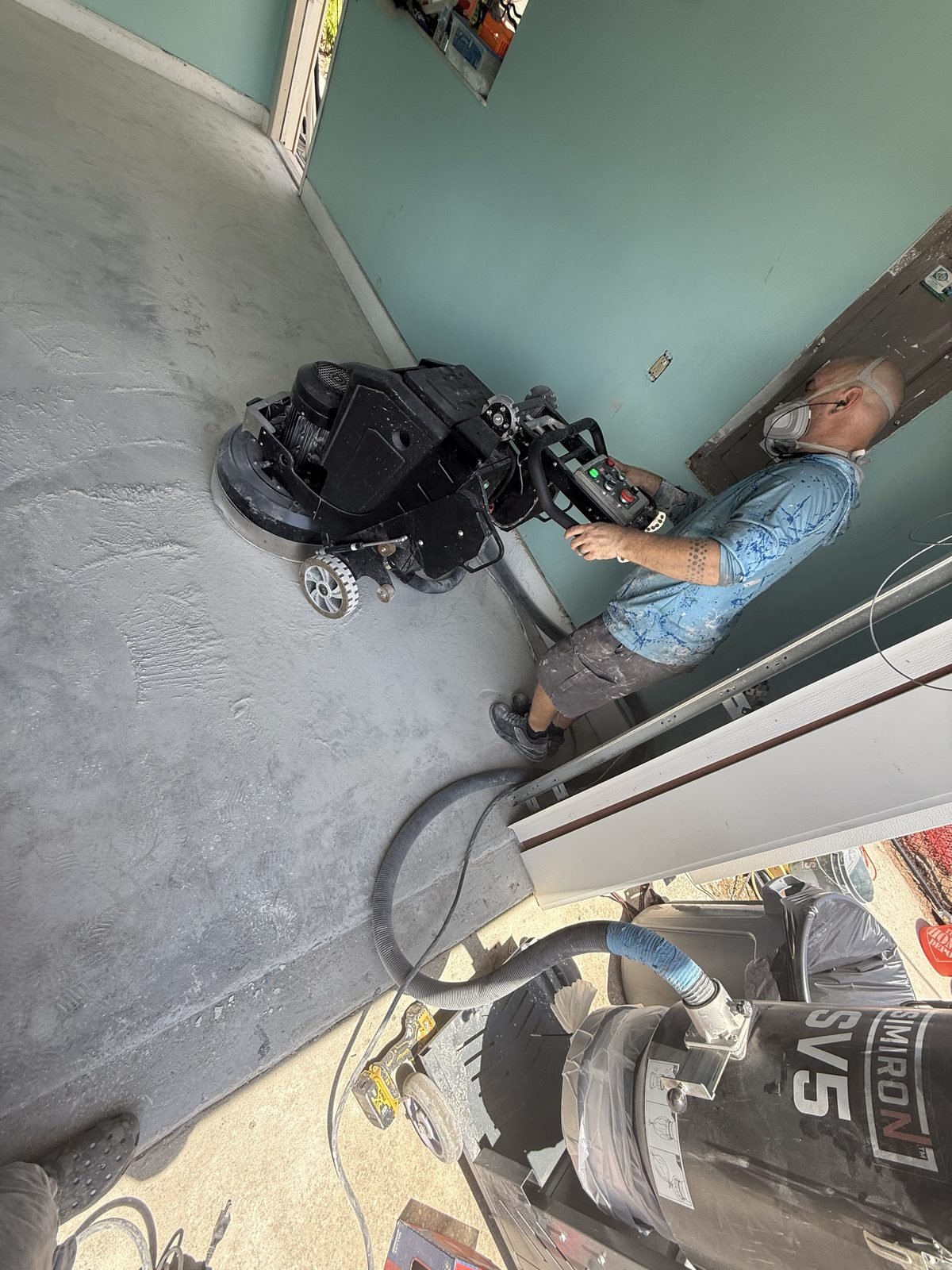
Not all epoxy systems are created equal. The type of coating you choose — and the environment it's installed in — directly impacts how long your floor will perform.
| Coating Type | Typical Lifespan | Best For |
|---|---|---|
| 100% Solids Epoxy | 15–20+ years | Garages, commercial, industrial |
| Polyaspartic Coating | 15–20+ years | UV-exposed areas, fast turnaround |
| Flake Epoxy System | 15–20+ years | Residential garages, showrooms |
| Metallic Epoxy | 15–20+ years | Showrooms, retail, luxury residential |
| Water-Based Epoxy | 2–5 years | Light-duty, temporary applications |
| DIY Epoxy Kits | 1–3 years | Not recommended |
The pattern is clear: professional-grade systems with 100% solids content dramatically outlast consumer-grade and water-based alternatives. The investment in quality materials pays for itself many times over.
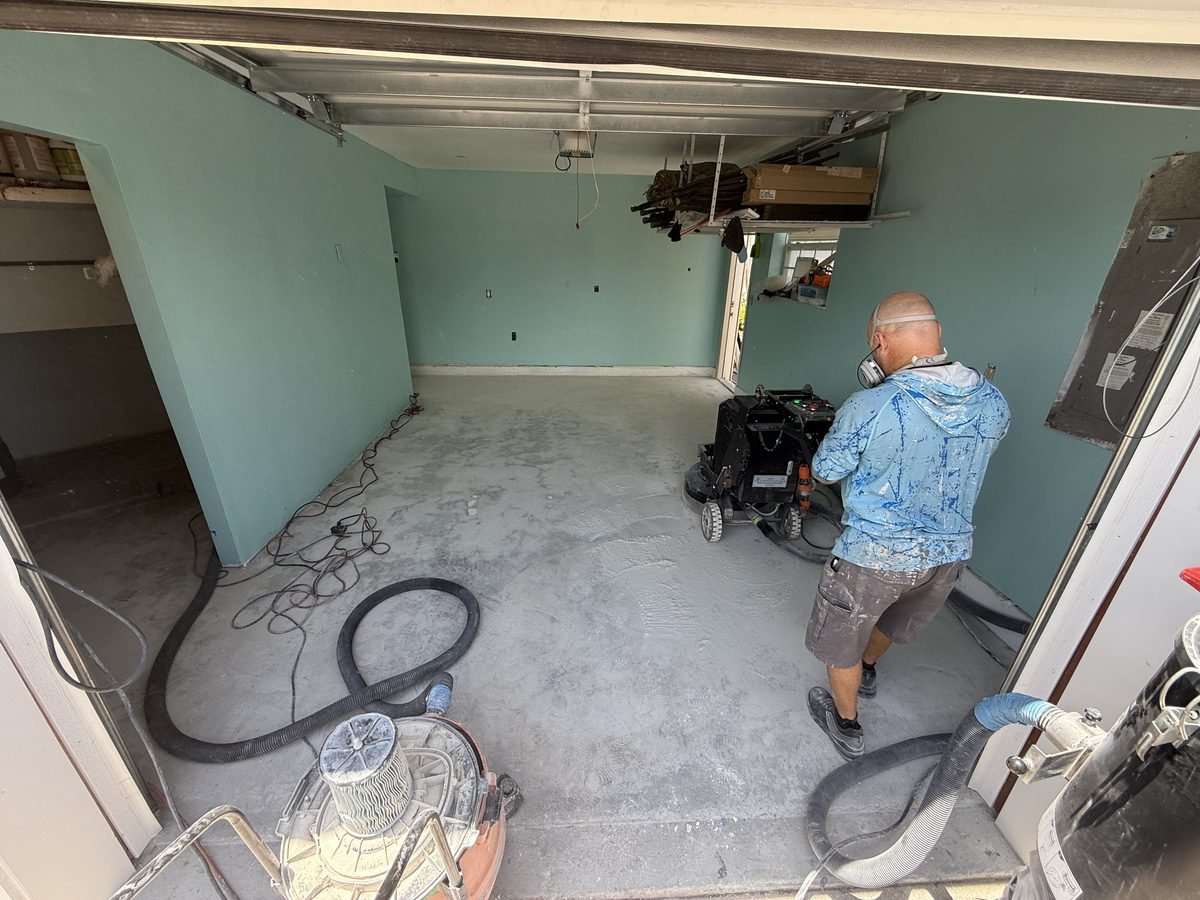
This is the single most important factor. Diamond grinding the concrete to a CSP 2-3 profile creates thousands of microscopic peaks and valleys that the epoxy bonds into mechanically. Acid etching — the shortcut most budget contractors use — only removes surface contaminants without creating a true mechanical profile. Floors prepped with acid etching are far more likely to delaminate within the first few years. At Proven Surfaces, we diamond grind every single floor. No exceptions.
Diamond grinding the concrete to a CSP 2-3 profile creates thousands of microscopic peaks and valleys that the epoxy bonds into mechanically. This is the single most important factor in longevity.
The "solids content" of an epoxy refers to the percentage of material that remains after curing. A 100% solids epoxy leaves behind a dense, continuous film with zero voids. Water-based epoxies contain 40-60% water that evaporates during curing, leaving a thinner, weaker film riddled with microscopic pinholes. That's why a 100% solids system at 10-20 mils thick will outperform a water-based coating at the same thickness by a factor of three or more.
A residential garage with one or two vehicles will see far less wear than a commercial warehouse with forklift traffic eight hours a day. Heavy rolling loads, point impacts, and constant foot traffic all accelerate wear on any flooring system. For high-traffic commercial environments, we recommend polyaspartic topcoats or urethane sealers that add an extra layer of abrasion resistance.
UV exposure, temperature swings, moisture vapor transmission, and chemical exposure all affect longevity. Standard epoxy resins will amber and yellow under direct sunlight — that's why we use UV-stable polyaspartic or aliphatic urethane topcoats on every floor exposed to natural light. Moisture is equally destructive: if your slab has a high moisture vapor emission rate and it isn't addressed before coating, hydrostatic pressure will push the epoxy right off the concrete.
Even the best materials will fail if applied incorrectly. Mixing ratios must be precise. Ambient temperature and humidity must fall within the manufacturer's specifications. Each coat needs proper cure time before the next layer is applied. Rushing any of these steps — or ignoring them entirely — leads to premature failure. Professional installation isn't a luxury; it's the only way to guarantee the system performs as engineered.
Even the best materials will fail if applied incorrectly. Professional installation isn't a luxury — it's the only way to guarantee the system performs as engineered.
When you see an epoxy floor peeling, bubbling, or flaking after a year or two, the failure almost always traces back to one of these shortcuts:
Every one of these failures is preventable. They happen because someone cut corners to save time or money. A contractor who diamond grinds, tests moisture, uses 100% solids materials, and applies a UV-stable topcoat will deliver a floor that lasts decades — not months.
Once your epoxy floor is properly installed, keeping it in peak condition requires minimal effort:
Following these simple practices will keep your epoxy floor looking showroom-new for its entire lifespan — and potentially extend it well beyond 20 years.
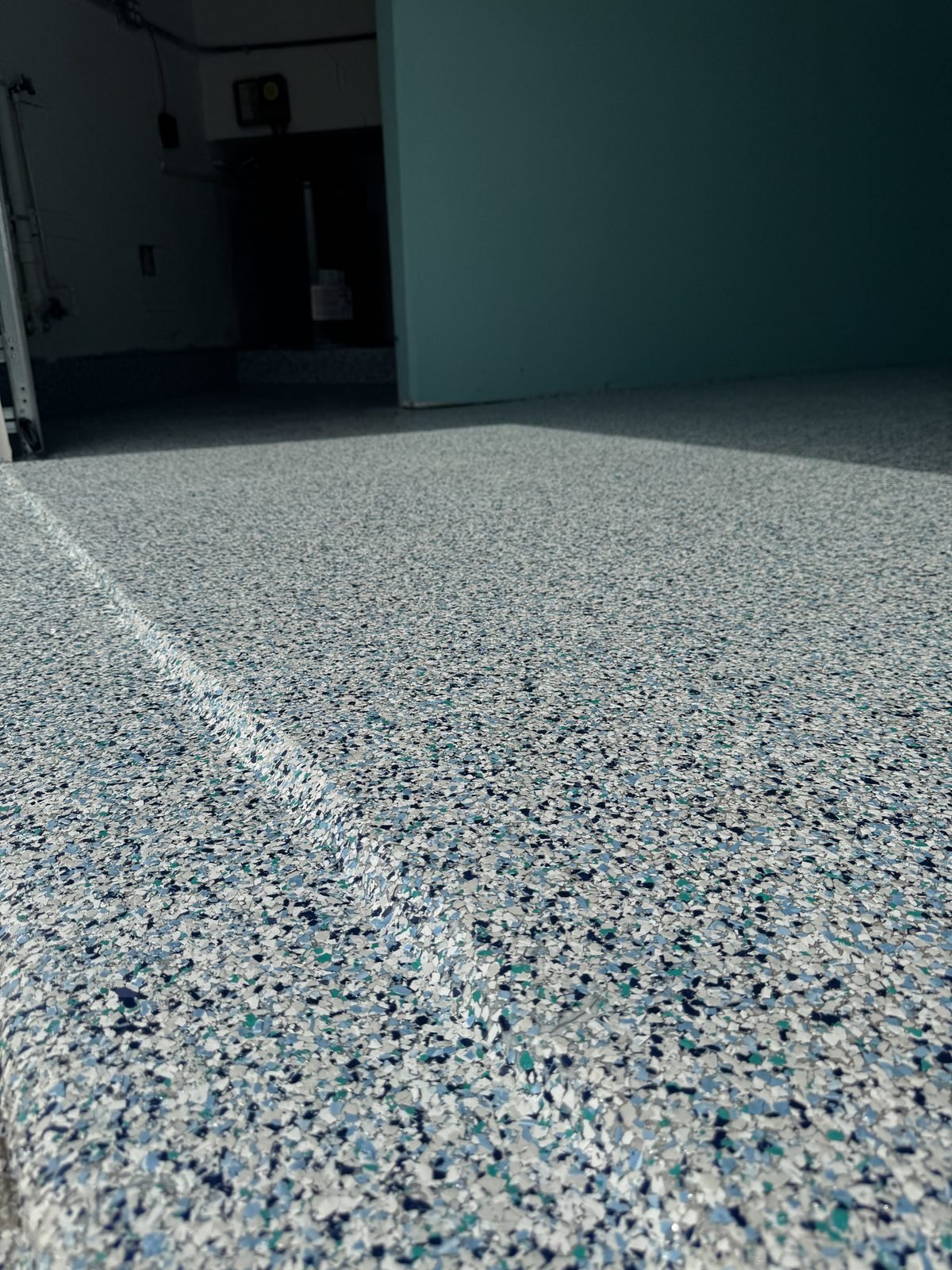
Epoxy flooring is one of the most durable, cost-effective flooring investments you can make — if it's installed correctly. The difference between a floor that lasts two years and one that lasts twenty comes down to preparation, materials, and craftsmanship. At Proven Surfaces, we control every variable: diamond grinding, 100% solids epoxy, UV-stable topcoats, and a written 5-year warranty on every installation. That's how we deliver floors that perform for decades.
Ready to get started?
Get Your Free Assessment →