If you're researching floor coatings, you've almost certainly encountered the same two names over and over: epoxy and polyaspartic. These are the two dominant coating chemistries in the professional flooring industry, and for good reason — both deliver exceptional durability, chemical resistance, and long-term performance when installed correctly. But they are not the same product. They cure differently, perform differently under UV exposure, cost different amounts, and suit different project timelines. Choosing the wrong one can mean unnecessary expense, extended downtime, or a finish that doesn't hold up in your specific environment.
This guide breaks down the real differences between epoxy and polyaspartic coatings — not the marketing claims, but the technical realities that contractors and facility managers need to understand before committing to a system. We'll cover the chemistry, the pros and cons of each, a side-by-side comparison table, and specific recommendations based on the type of space you're coating.
Understanding Epoxy Floor Coatings
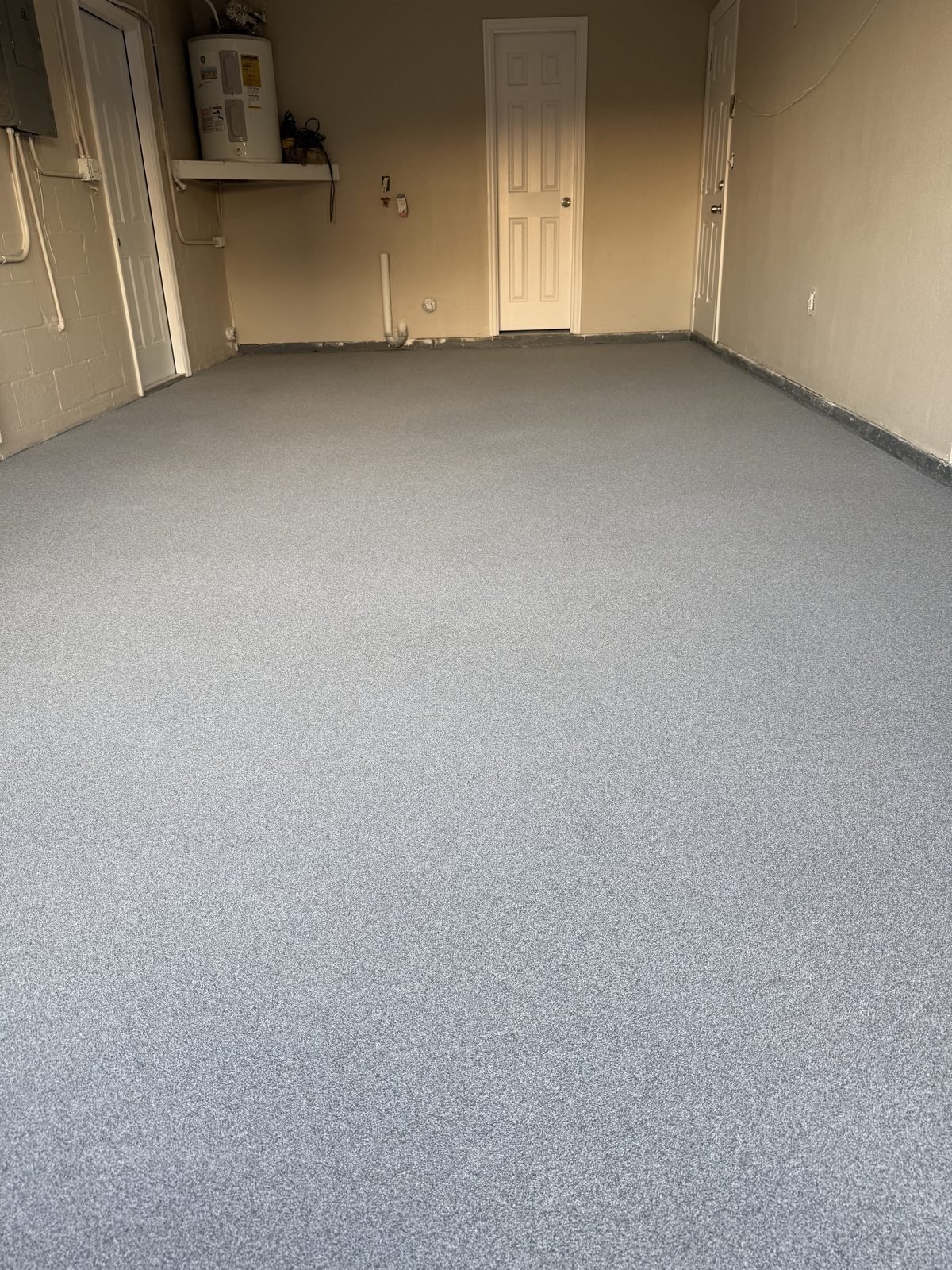
Epoxy is a thermosetting polymer formed by combining an epoxide resin with a polyamine hardener. When these two components are mixed, they undergo an exothermic chemical reaction that cross-links the molecules into an extremely dense, rigid matrix. The result is a coating that bonds tenaciously to properly prepared concrete and provides outstanding compressive strength, chemical resistance, and impact tolerance.
Professional-grade epoxy systems use 100% solids formulations, meaning there are no solvents or water carriers that evaporate during cure. Every drop of material that goes onto the floor stays on the floor, producing a thick, seamless coating in a single application. This is fundamentally different from the water-based or solvent-based "epoxy paint" products sold at hardware stores, which contain 40-60% solvent and produce a film that is a fraction of the thickness.
Professional-grade epoxy systems use 100% solids formulations — every drop of material that goes onto the floor stays on the floor, producing a thick, seamless coating in a single application.
Pros of Epoxy
- Superior adhesion — Epoxy forms a direct chemical and mechanical bond with concrete when the surface is diamond-ground to CSP 2-3. This is the gold standard for long-term coating adhesion.
- Excellent chemical resistance — Cured 100% solids epoxy resists gasoline, oil, brake fluid, battery acid, and most industrial chemicals without softening or staining.
- High build thickness — A single coat of 100% solids epoxy can be applied at 10-20 mils, creating a substantial protective layer that absorbs impact and resists abrasion.
- Cost-effective — Epoxy resin is less expensive per gallon than polyaspartic, making it the more budget-friendly base coat option for large-area projects.
- Proven track record — Epoxy has been the industry standard for decades. Its performance characteristics are well-documented and predictable.
Cons of Epoxy
- Slow cure time — Standard epoxy requires 12-24 hours between coats and 72 hours before vehicle traffic. Multi-coat systems can take 3-5 days to complete.
- UV sensitivity — Unprotected epoxy will yellow and amber when exposed to direct sunlight. Garages with south-facing doors and any outdoor-adjacent areas are particularly vulnerable.
- Temperature sensitivity during application — Epoxy should not be applied when ambient or slab temperatures are below 50°F or above 90°F. Cold temperatures slow the cure; excessive heat accelerates it unpredictably.
- Higher odor during installation — 100% solids epoxy systems produce moderate VOCs during mixing and application. Adequate ventilation is required.
Understanding Polyaspartic Coatings
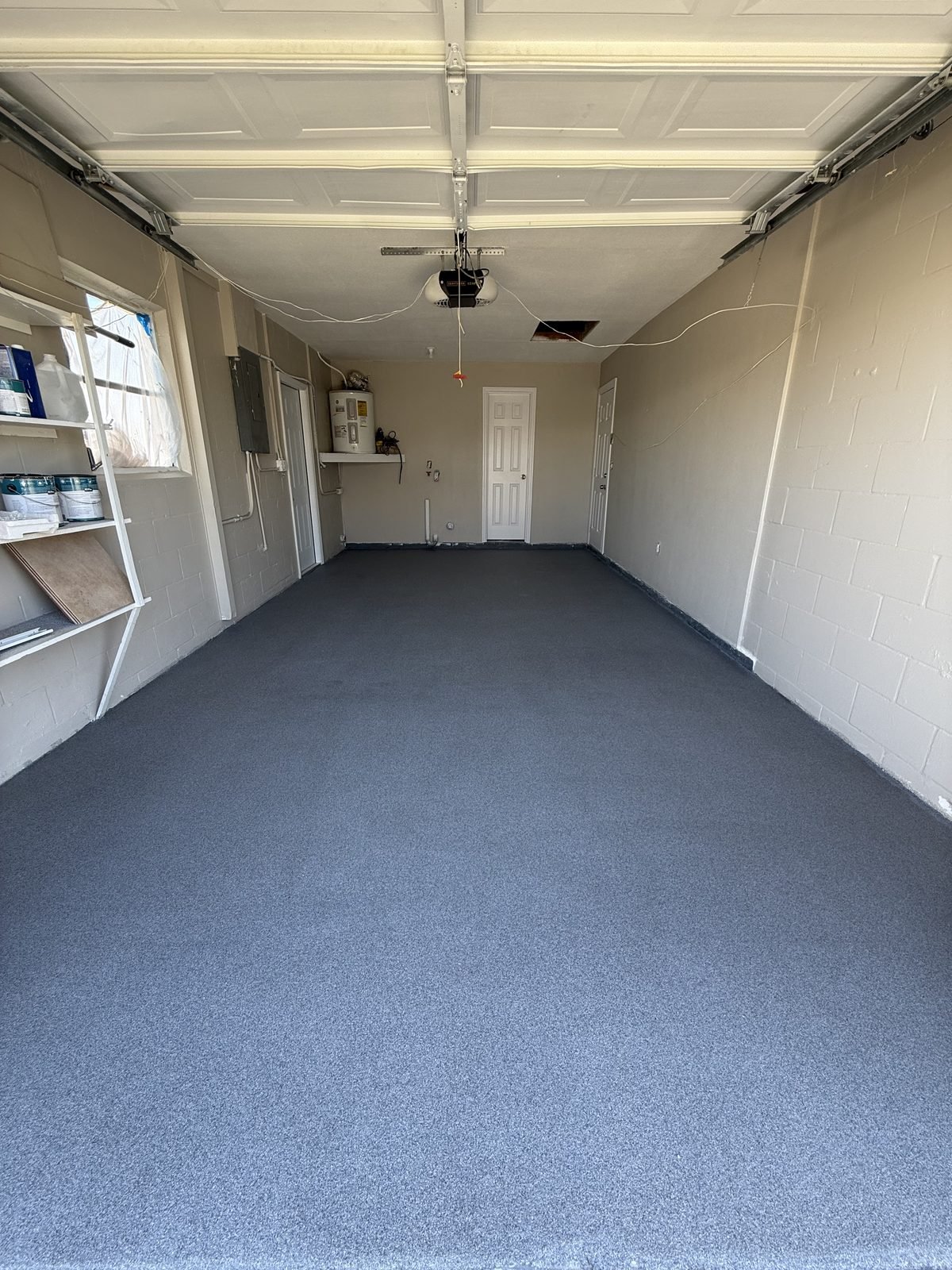
Polyaspartic is a type of aliphatic polyurea — a two-component coating that cures through a reaction between a polyaspartic ester and an aliphatic polyisocyanate. Unlike epoxy, polyaspartic coatings are inherently UV-stable due to their aliphatic chemistry, which means they will not yellow, amber, or chalk when exposed to sunlight. This makes polyaspartic the go-to topcoat for any floor that sees UV exposure.
Polyaspartic coatings also cure dramatically faster than epoxy. Depending on the formulation and ambient temperature, a polyaspartic coat can be tack-free in as little as 2-4 hours and ready for foot traffic the same day. This rapid cure time is a significant advantage for commercial and industrial projects where every day of downtime costs money.
Polyaspartic coatings cure dramatically faster — tack-free in as little as 2–4 hours and ready for foot traffic the same day.
Pros of Polyaspartic
- Rapid cure time — Walk-on ready in 4-6 hours, vehicle traffic in 24 hours. Single-day installations are possible for experienced crews.
- Inherent UV stability — Will not yellow, amber, or degrade under UV exposure. No additives needed — the UV resistance is built into the molecular structure.
- Superior abrasion resistance — Polyaspartic topcoats deliver approximately 4x the abrasion resistance of standard polyurethane topcoats, extending the life of the entire system.
- Wide temperature tolerance — Can be applied in temperatures as low as 30°F and as high as 100°F, making it suitable for year-round installation in most climates.
- Low odor and low VOC — Significantly lower odor than epoxy during application, making it more suitable for occupied or enclosed spaces.
Cons of Polyaspartic
- Higher material cost — Polyaspartic resin costs 30-50% more per gallon than equivalent epoxy resin.
- Shorter working time — The same fast cure that's an advantage for timelines becomes a challenge during application. Crews must work quickly and efficiently — there's minimal time for corrections.
- Thinner film build — Polyaspartic coatings are typically applied at 4-8 mils per coat, compared to 10-20 mils for epoxy. Multiple coats or a thicker epoxy base are needed for adequate total system thickness.
- Weaker adhesion to bare concrete — Polyaspartic does not bond to concrete as tenaciously as epoxy. When used as the only coating (no epoxy base), delamination risk increases, especially on slabs with moisture issues.
Side-by-Side Comparison
The following table compares the key performance characteristics of epoxy and polyaspartic coatings across the factors that matter most to contractors, facility managers, and homeowners:
| Property | Epoxy (100% Solids) | Polyaspartic |
|---|---|---|
| Cure Time | 12-24 hrs between coats; 72 hrs for vehicles | 2-4 hrs between coats; 24 hrs for vehicles |
| UV Stability | Poor — yellows without UV topcoat | Excellent — inherently UV-stable |
| Chemical Resistance | Excellent — resists fuel, oil, acids | Good — resists most chemicals |
| Cost per Sq Ft | $3 – $12 | $5 – $15 |
| Lifespan | 15 – 20+ years | 10 – 15 years (standalone) |
| Temperature Sensitivity | 50°F – 90°F application range | 30°F – 100°F application range |
| Odor / VOCs | Moderate — ventilation required | Low — suitable for occupied spaces |
| Adhesion to Concrete | Excellent with diamond grinding | Good — best over epoxy base coat |
| Abrasion Resistance | Good | Excellent — 4x polyurethane |
| Film Thickness per Coat | 10 – 20 mils | 4 – 8 mils |
Best Use Cases
Different environments demand different performance characteristics. Here's what we recommend based on the type of space you're coating:
Garage Floors
Recommended: Epoxy base + polyaspartic topcoat. Garages are exposed to hot tires, chemical spills, UV light from open doors, and temperature swings throughout the year. The ideal system uses a 100% solids epoxy base coat for maximum adhesion and chemical resistance, topped with a polyaspartic clear coat that prevents yellowing and provides superior abrasion resistance. This hybrid approach gives you the best of both chemistries — the tenacious bond and build thickness of epoxy with the UV stability and fast return-to-service of polyaspartic. Most garage projects with this system are completed in 2 days with vehicle traffic possible on day 3.
Warehouse & Commercial Spaces
Recommended: 100% solids epoxy system with polyurethane or polyaspartic topcoat. Large commercial floors prioritize durability, chemical resistance, and cost-per-square-foot. A multi-coat epoxy system provides the thick, impact-resistant coating that forklift traffic, pallet jacks, and heavy equipment demand. For warehouses without significant UV exposure, a polyurethane topcoat offers adequate protection at lower cost. For spaces with skylights, loading docks, or sun-facing openings, upgrade to a polyaspartic topcoat to prevent yellowing in those zones.
Showrooms & Retail Spaces
Recommended: Metallic epoxy base + polyaspartic topcoat. Retail and showroom environments need a floor that looks as impressive as it performs. Metallic epoxy creates the dramatic, high-gloss visual impact that draws attention, while a polyaspartic topcoat ensures that finish stays crystal-clear under indoor lighting and storefront UV exposure. The rapid cure time of polyaspartic also minimizes business disruption — many retail installations are completed over a single weekend.
Which Should You Choose?
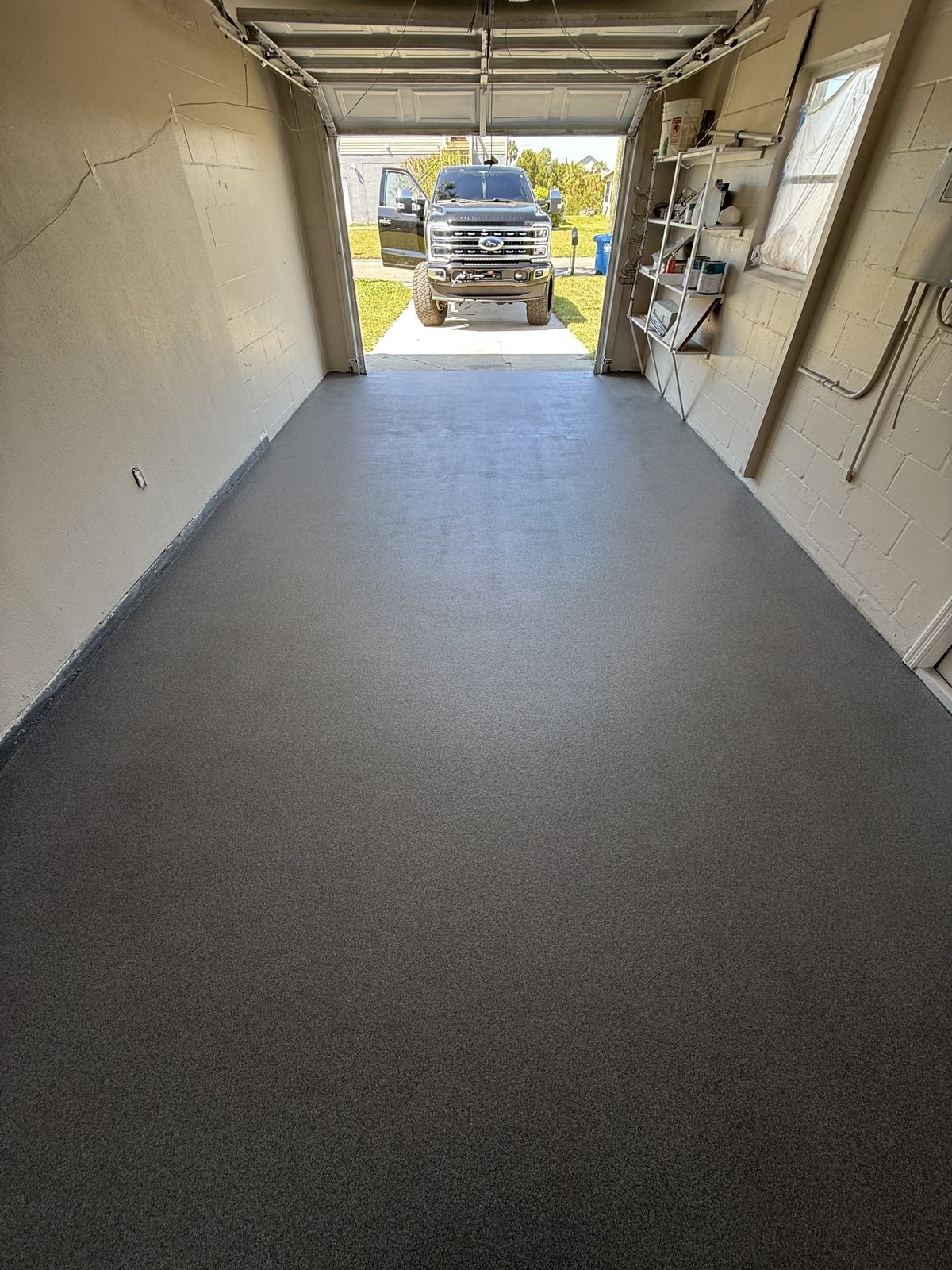
The honest answer? In most professional applications, you shouldn't choose one or the other — you should use both. The highest-performing floor coating systems in the industry combine a 100% solids epoxy base coat with a polyaspartic topcoat. The epoxy provides the adhesion, chemical resistance, and build thickness that protects the concrete. The polyaspartic provides the UV stability, abrasion resistance, and fast cure time that protects the epoxy.
The highest-performing floor coating systems combine a 100% solids epoxy base coat with a polyaspartic topcoat — delivering 20+ years of performance.
Standalone polyaspartic systems (polyaspartic over bare concrete with no epoxy base) are marketed heavily by one-day coating franchises, but they sacrifice adhesion and total system thickness for speed. In our experience, these systems are more prone to delamination on slabs with even moderate moisture vapor transmission. A proper epoxy base coat, applied over diamond-ground concrete with verified moisture levels, is the foundation that makes the entire system last.
At Proven Surfaces, every installation starts with mechanical surface preparation (diamond grinding to CSP 2-3), moisture testing per ASTM F2170, and a 100% solids epoxy base coat. We then apply a UV-stable polyaspartic topcoat to protect the system from UV damage and abrasion. This is the system we stand behind with our written 5-year warranty — because it's the system that actually performs for 15-20+ years.
Frequently Asked Questions
It depends on your priorities. Polyaspartic cures faster and won't yellow in sunlight, but it doesn't bond to bare concrete as well as epoxy and produces a thinner film per coat. The best garage floor systems combine both — a 100% solids epoxy base for adhesion and build thickness, topped with a polyaspartic clear coat for UV protection and abrasion resistance. This hybrid approach delivers superior performance compared to either system used alone.
A standalone polyaspartic system typically lasts 10-15 years, while a 100% solids epoxy system with a UV-stable topcoat lasts 15-20+ years. The longest-lasting option is a hybrid system that uses epoxy as the base coat and polyaspartic as the topcoat — this combination can exceed 20 years with proper maintenance because each layer handles what it does best.
Yes, polyaspartic can be applied over properly prepared existing epoxy. The existing epoxy surface must be lightly abraded (scuff-sanded or screen-sanded) and cleaned to create a mechanical bond for the new topcoat. This is actually the most common professional approach — using polyaspartic as a UV-stable topcoat over an epoxy base rather than as a standalone system.
Polyaspartic resin costs 30-50% more per gallon than epoxy resin due to its more complex aliphatic polyurea chemistry. The rapid cure time also demands experienced installers who can work quickly and precisely — there's no room for error when the material begins to set in 15-20 minutes. However, the faster cure time means less total labor and faster return to service, which can offset the higher material cost for commercial projects with tight schedules.
Ready to get started?
Get your free assessment and find out which coating system is right for your floor.
Get Your Free Assessment →