
"How much does it cost?" It's the first question every homeowner asks — and it deserves a straight answer. Garage floor coatings range from a few dollars per square foot for basic systems to well over fifteen dollars per square foot for premium decorative finishes. The spread is wide because the variables are real: coating type, floor condition, square footage, number of coats, and who does the work all move the needle significantly. This guide breaks down every factor so you can set a realistic budget before you request a single quote.
Whether you're coating a two-car garage or resurfacing a large commercial shop floor, understanding what drives cost — and where corners should never be cut — is the difference between a floor that lasts two years and one that lasts twenty.
Average Cost Per Square Foot
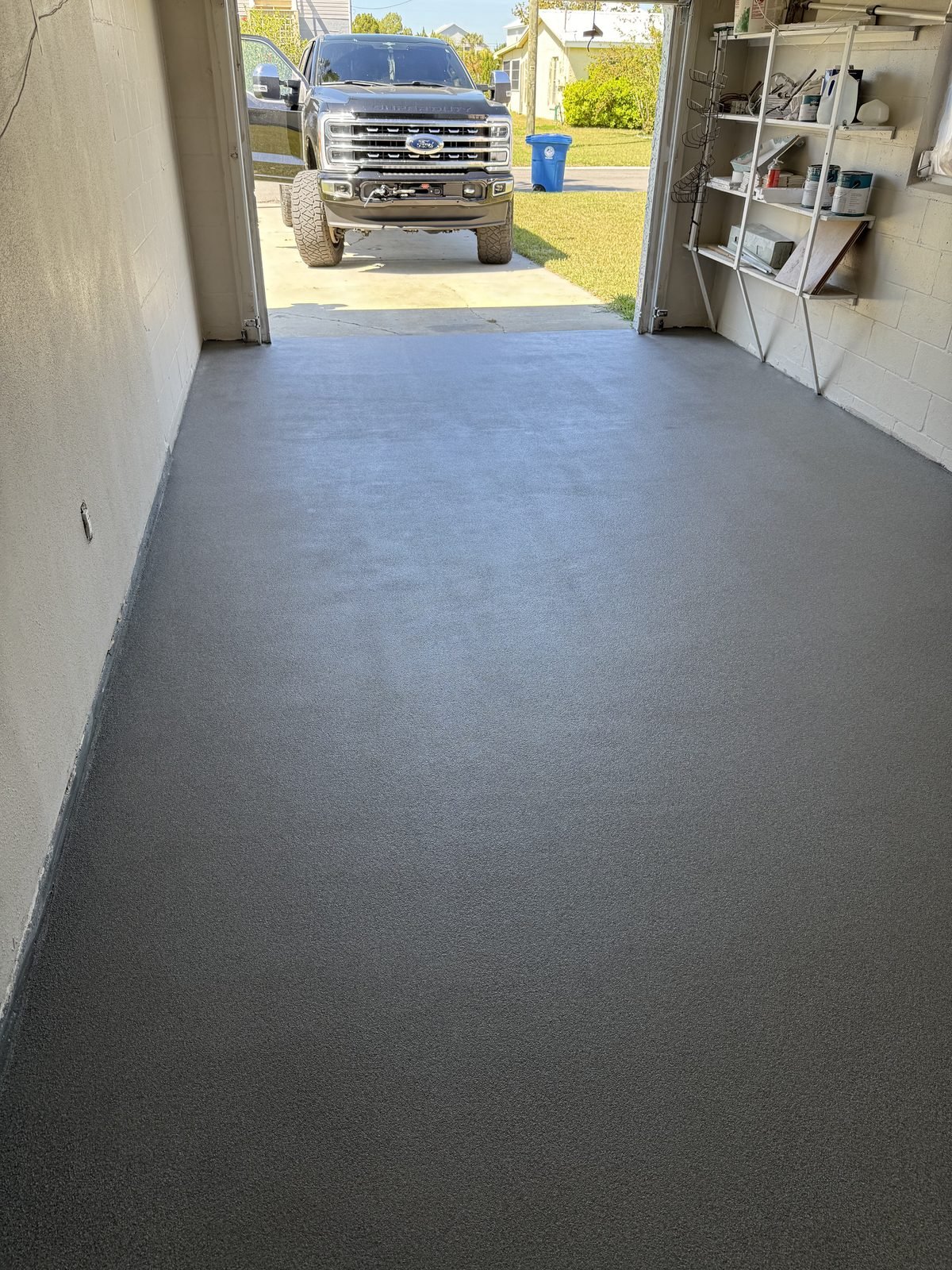
The national average for a professionally installed garage floor coating falls between $3 and $18 per square foot, depending on the system selected. That range accounts for everything from a single-coat solid-color epoxy to a multi-layer metallic system with polyaspartic topcoat. For context, a standard two-car garage (roughly 400–500 square feet) typically runs between $1,500 and $6,000 installed. Three-car garages and oversized workshops scale accordingly.
The national average for a professionally installed garage floor coating falls between $3 and $18 per square foot. A standard two-car garage typically runs between $1,500 and $6,000 installed.
Here's how the most common coating types compare side by side:
| Coating Type | Cost / sq ft | Typical Lifespan | Best For |
|---|---|---|---|
| Solid Color Epoxy | $3 – $7 | 10 – 15 years | Budget-friendly garages & utility spaces |
| Flake Epoxy | $4 – $12 | 15 – 20 years | Residential garages & workshops |
| Polyaspartic | $6 – $12 | 15 – 20 years | Fast-turnaround projects & UV-exposed areas |
| Metallic Epoxy | $7 – $18 | 15 – 20 years | Showrooms, luxury garages & high-end spaces |
| Polished Concrete | $3 – $14 | 20+ years | Commercial floors, warehouses & modern homes |
These ranges reflect professional installation with proper surface preparation, quality materials, and a topcoat or sealer. Big-box store kits and fly-by-night installers may quote below these ranges, but the longevity and finish quality rarely compare.
What Factors Affect Cost?
No two garage floors cost the same to coat. These are the primary variables that move a project up or down the pricing spectrum:
Square Footage
Larger floors generally cost less per square foot because material coverage is more efficient and setup costs are spread across a bigger area. A 250-square-foot single-car garage may run $6–$10 per square foot, while a 600-square-foot three-car garage might come in at $4–$8 per square foot for the same system. Volume discounts on materials also kick in at larger scales.
Floor Condition
This is the factor most homeowners underestimate. If your concrete slab has cracks, spalling, oil stains, prior coatings, or moisture issues, the prep work required before any coating can be applied increases substantially. Diamond grinding a clean slab to the proper profile is straightforward. Removing a failed DIY epoxy, patching divots, and installing a moisture mitigation system is not — and it adds cost accordingly.
Coating Type
As the table above illustrates, the system you choose has the largest impact on price. A single-coat solid-color epoxy is the most affordable option. A multi-layer metallic system with primer, base coat, metallic application, and polyaspartic topcoat requires more material, more labor hours, and more skill — and the price reflects that.
Number of Coats
A basic system may include a primer and a single color coat. A premium system adds a full broadcast layer, a grout coat, and one or two clear topcoats. Each additional layer improves durability, chemical resistance, and visual depth — but also adds material and labor cost. Most professional-grade systems include at least three coats.
Geographic Location
Labor rates, material availability, and cost of living vary by region. Coastal markets and major metro areas tend to run 15–25% higher than rural or suburban markets for equivalent systems. Climate also matters: regions with extreme humidity or freeze-thaw cycles may require specialty primers or moisture mitigation that add to the overall investment.
DIY vs Professional Installation
A DIY epoxy kit from a home improvement store runs $50–$300 for a one- or two-car garage. Professional installation for the same space starts at $1,500 and can exceed $5,000 for premium systems. On paper, the savings look enormous. In practice, the comparison isn't that simple.
DIY kits typically use water-based epoxy at 40–50% solids content. Professional systems use 100% solids epoxy or polyaspartic resins that are dramatically harder, thicker, and more chemical-resistant. DIY kits also skip the most critical step: mechanical surface preparation. Rolling a thin coating over acid-etched concrete — the method most kits recommend — does not create the concrete surface profile required for long-term adhesion. The result is a floor that looks acceptable for six to eighteen months before it begins to peel, hot-tire lift, or yellow.
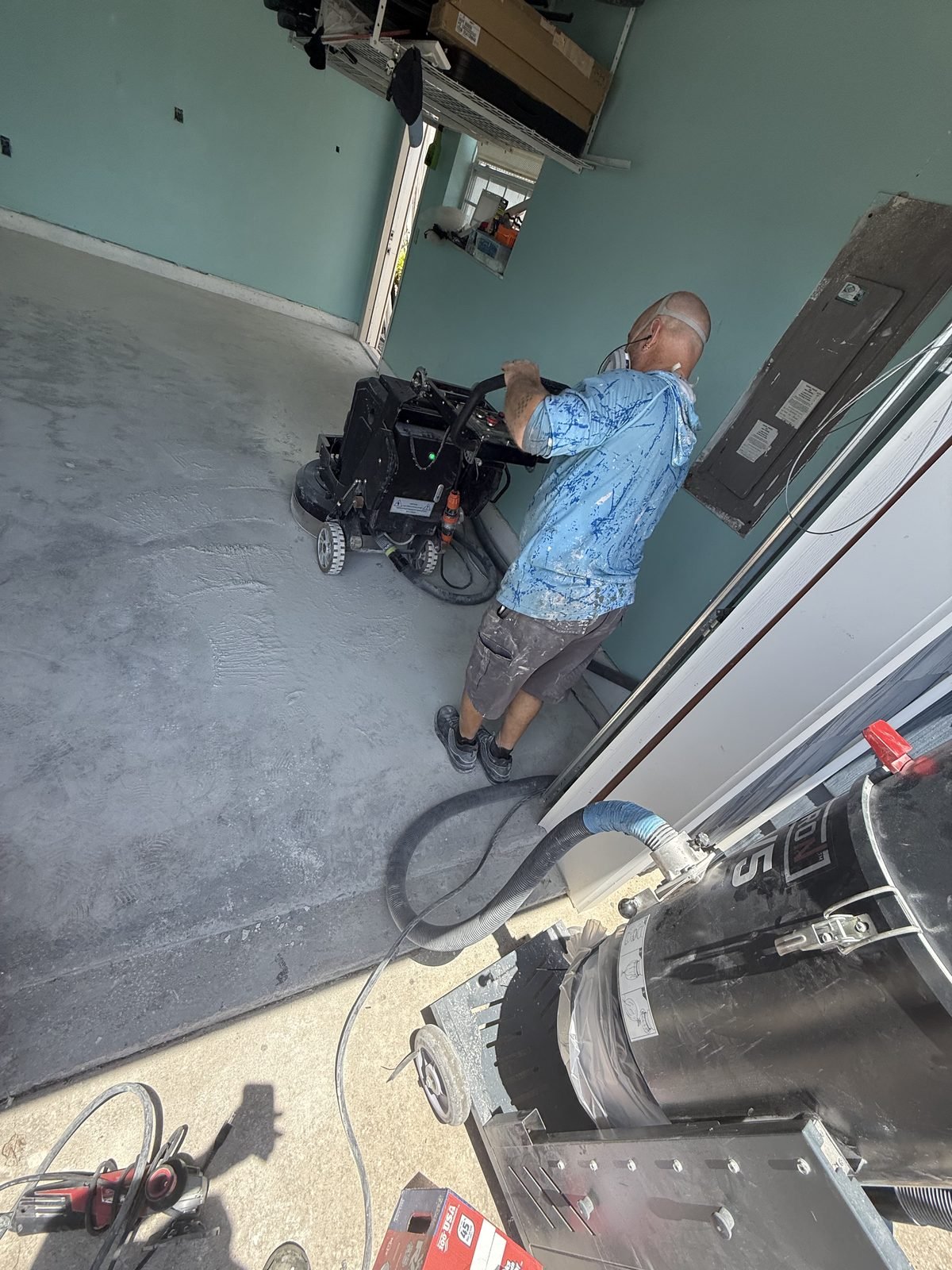
Professional installers diamond-grind the slab to a CSP of 2–3, test for moisture, repair cracks and defects, apply a penetrating primer, build the coating system in multiple layers, and finish with a UV-stable topcoat. The process takes one to three days, and the floor is engineered to last fifteen to twenty years.
If your goal is a short-term cosmetic improvement on a tight budget, a DIY kit can work. If you want a floor that performs under hot tires, chemical spills, and daily abuse for over a decade, professional installation is the better investment per year of service life.
DIY kits use water-based epoxy at 40–50% solids. Professional systems use 100% solids epoxy — dramatically harder, thicker, and more chemical-resistant.
Hidden Costs to Watch For
The quote you receive should include everything — but not all quotes are created equal. Watch for these commonly overlooked expenses:
- Inadequate surface preparation. Any installer who skips diamond grinding in favor of acid etching or minimal prep is cutting the single most important corner in the process. The floor may look fine on day one, but adhesion failure is almost guaranteed within a few years. Proper prep typically accounts for 30–40% of the total project cost — and it should.
- Moisture issues. Concrete slabs without a vapor barrier can transmit enough moisture to cause coating delamination. If your slab tests above the manufacturer's moisture threshold, a vapor mitigation system ($1.50–$3.00 per square foot) is required before any coating is applied. Skipping this step is the most common cause of coating failure on older slabs.
- Crack and joint repairs. Surface cracks, control joint deterioration, and spalled areas must be repaired before coating. Minor crack repair may be included in a standard quote, but extensive patching, joint filling, or leveling adds additional cost. Ask your installer exactly what's included — and what isn't.
- Furniture and item removal. Most quotes assume a cleared garage. If your installer needs to move vehicles, storage, shelving, or equipment, that time may be billed separately.
How to Get the Best Value
Getting the best value doesn't mean finding the cheapest price. It means maximizing the performance and longevity you receive for every dollar spent. Here's how:
- Get at least three quotes. Compare not just price, but what's included: surface prep method, number of coats, material brand, topcoat type, and warranty terms. The cheapest bid often omits critical steps.
- Ask about surface preparation. Diamond grinding should be non-negotiable. Any installer who proposes acid etching for a 100% solids system is cutting a corner that will cost you later.
- Choose the right system for your use case. A solid-color epoxy is perfectly adequate for a utility garage. You don't need a metallic system to park your daily driver. Match the coating to the space and the budget follows.
- Don't skip the topcoat. A UV-stable polyaspartic or polyurethane topcoat adds $1–$3 per square foot but dramatically extends the life of the system and protects against yellowing, abrasion, and chemical damage.
- Consider long-term cost per year. A $2,000 floor that lasts five years costs $400 per year. A $4,000 floor that lasts twenty years costs $200 per year. The more expensive system is often the better deal when measured over its full service life.
A $2,000 floor that lasts five years costs $400 per year. A $4,000 floor that lasts twenty years costs $200 per year. The more expensive system is often the better deal.
The Bottom Line
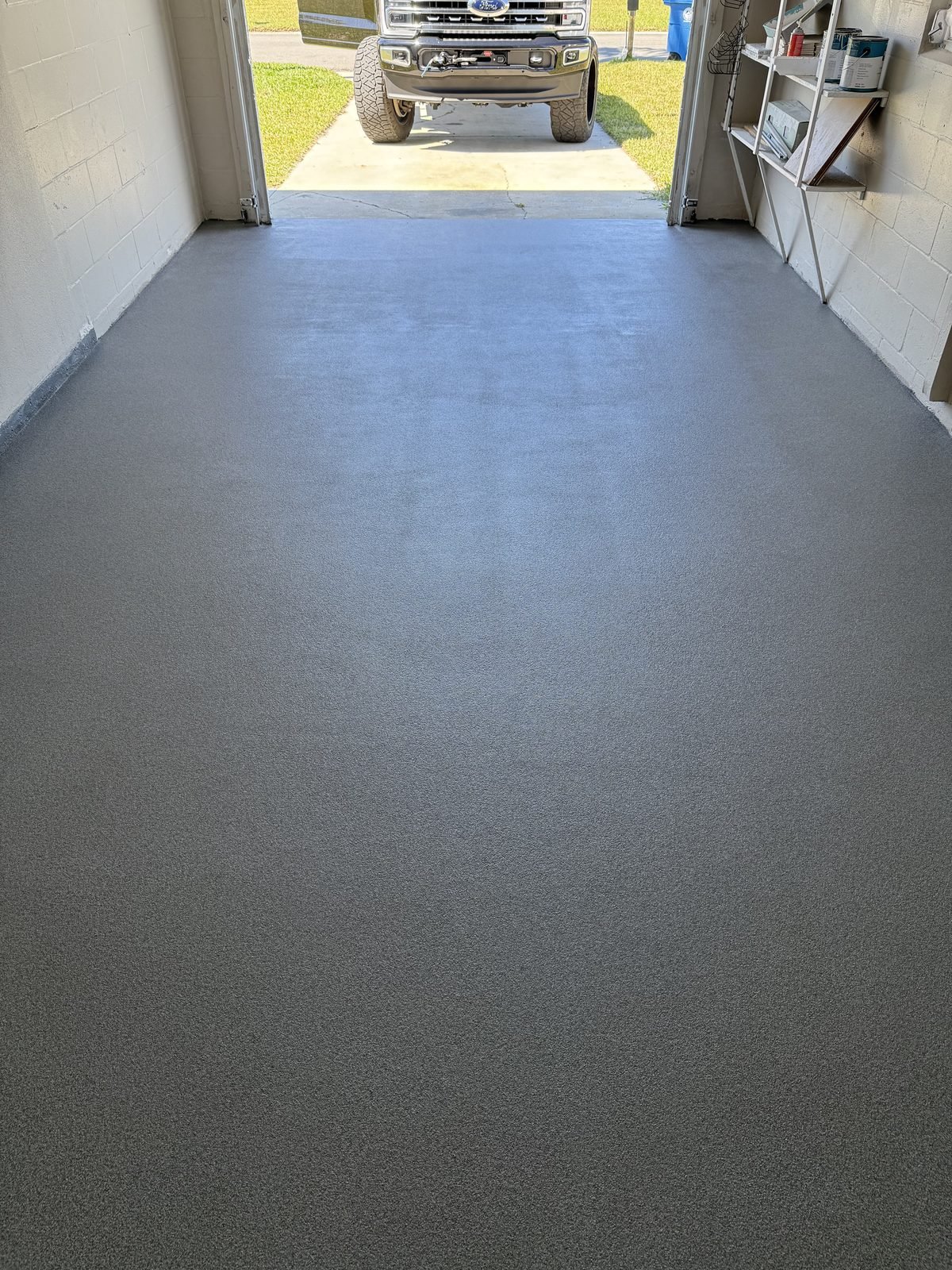
Garage floor coatings are an investment in your home — one that pays dividends in durability, appearance, and property value every year the floor is in service. The right system, properly installed, transforms a bare concrete slab into a surface that handles hot tires, chemical spills, impacts, and daily traffic without flinching. Understand the cost drivers, ask the right questions, compare quotes on substance rather than price alone, and you'll end up with a floor that outperforms and outlasts every shortcut on the market.
Ready to get started?
Get your free on-site assessment and a transparent, all-inclusive quote for your garage floor.
Get Your Free Assessment →