
If you live anywhere in the Tampa Bay area — from downtown Tampa to the beaches of St. Petersburg, the suburbs of Brandon and Riverview, or the growing communities of Wesley Chapel and Spring Hill — your garage floor, lanai, and outdoor surfaces face a unique set of challenges that most of the country simply doesn't deal with. Between relentless humidity, brutal summer heat, hurricane season, and a high water table, the flooring system you choose needs to be purpose-built for Florida conditions.
Epoxy flooring has become the go-to solution for Tampa Bay homeowners, and for good reason. When installed by a professional who understands our local climate, an epoxy coating system transforms bare concrete into a seamless, moisture-resistant, beautiful surface that can handle everything Florida throws at it. But there's a catch: not all epoxy installations are equal, and the shortcuts that might work in a dry climate like Arizona will lead to catastrophic failure in Tampa Bay.
This guide covers everything you need to know — from why Tampa's specific climate conditions make professional installation essential, to realistic costs, timelines, and how to choose the right contractor for your project.
Tampa Bay's combination of high humidity, intense UV exposure, and hurricane-season storms makes it one of the most demanding environments for floor coatings in the entire country. A system that works in Colorado won't survive its first summer here.
Why Tampa Bay's Climate Makes Epoxy Flooring the Smart Choice
Tampa Bay averages 74% relative humidity year-round, with summer months regularly exceeding 90%. That moisture doesn't just sit in the air — it migrates through your concrete slab via a process called moisture vapor transmission (MVT). Every home from Clearwater to Riverview sits on a concrete slab that's absorbing groundwater from Florida's notoriously high water table, and that moisture is constantly trying to push upward through the concrete and into your living space.
This is where epoxy flooring excels. A properly installed epoxy system creates an impermeable barrier across the entire floor surface. Unlike tile (which has grout lines), carpet (which absorbs moisture), or even paint (which sits on top without truly bonding), epoxy penetrates into the concrete pores and cures into a monolithic, seamless coating. There are no joints, no seams, and no entry points for moisture, mold, or mildew.
Humidity and Moisture Vapor Transmission
Here's what most DIY tutorials and big-box store employees won't tell you: Tampa Bay's humidity doesn't just affect the air in your garage — it affects the concrete itself. Florida's water table sits just a few feet below the surface in most of Hillsborough, Pinellas, and Pasco counties. That groundwater creates constant hydrostatic pressure against the bottom of your slab, pushing moisture vapor upward through microscopic capillaries in the concrete.
If you apply epoxy over concrete that has excessive moisture vapor transmission, the coating will fail. It might look perfect for a few weeks or even months, but eventually the moisture pressure will push the coating off the concrete from underneath. You'll see bubbling, peeling, and delamination — and the entire floor will need to be stripped and redone.
This is why professional installers in Tampa Bay perform moisture testing using the ASTM F2170 in-situ relative humidity probe method before every installation. This test involves drilling small holes into the slab, inserting calibrated probes, and measuring the actual relative humidity inside the concrete. If readings come back above 75% RH (or above 80% for some high-performance systems), the installer must address the moisture problem before coating — typically with a moisture mitigation primer or vapor barrier system.
UV Exposure and Hot Tire Pickup
Tampa Bay averages 246 sunny days per year, and our summer temperatures regularly push into the mid-90s. For epoxy garage floors, this creates two specific challenges that homeowners in northern climates rarely think about.
UV yellowing: Standard epoxy resins are not UV-stable. When exposed to direct sunlight — which happens every time you open your garage door in Tampa — they will yellow, chalk, and lose their gloss over time. This is purely cosmetic but extremely noticeable, especially on lighter colors. The solution is a UV-stable topcoat, typically polyaspartic or aliphatic polyurethane, applied as the final layer of the system. This topcoat is what gives professional epoxy floors in Florida their long-term color stability and gloss retention.
Hot tire pickup: When you park your car in the garage after driving on Tampa's sun-baked roads, your tires can reach temperatures of 200°F or higher. If the epoxy system lacks a proper topcoat, those hot tires will soften the surface layer and literally pull the coating off the floor when you drive away, leaving ugly marks or bare spots. A polyaspartic topcoat has a much higher heat tolerance and eliminates this problem entirely.
Hurricane Resilience
Tampa Bay homeowners know that hurricane season runs from June through November, and every year brings the possibility of serious storms. Whether it's a direct hit or the flooding and wind-driven rain from a near miss, your garage and outdoor surfaces are often the first to take the brunt of storm damage.
Epoxy flooring provides a significant advantage during and after hurricanes. The seamless, non-porous surface means there are no grout lines, carpet fibers, or wood seams for floodwater to penetrate. If storm surge or heavy rain pushes water into your garage — which is common in low-lying areas of Tampa, St. Petersburg, and Clearwater — the water sits on top of the coating rather than soaking into the concrete beneath.
After the storm passes, cleanup is remarkably simple. Squeegee the standing water toward the garage door, mop the surface, and you're done. Compare that to tile floors (where contaminated water seeps into grout and requires professional remediation), carpet (which must be torn out and replaced), or bare concrete (which absorbs water and breeds mold for weeks afterward).
Epoxy Flooring Costs in Tampa Bay: What to Expect
One of the most common questions we hear from homeowners across Tampa, Brandon, Wesley Chapel, and Spring Hill is: "How much does epoxy flooring actually cost?" The answer depends on several factors, but here's a realistic breakdown for the Tampa Bay market.
Professional epoxy flooring in Tampa Bay typically costs between $5 and $12 per square foot, depending on the coating system, the condition of your existing concrete, and the amount of preparation required. For a standard two-car garage (400–600 sq ft), most homeowners invest between $1,800 and $4,500.
Price Breakdown by System Type
| Coating System | Price per Sq Ft | 2-Car Garage Estimate | Best For |
|---|---|---|---|
| Solid Color Epoxy | $5 – $7 | $1,800 – $3,200 | Budget-friendly, clean look |
| Decorative Flake Epoxy | $6 – $9 | $2,400 – $4,000 | Most popular for garages |
| Metallic Epoxy | $8 – $12 | $3,200 – $5,500 | Show-quality, unique designs |
| Polyaspartic System | $7 – $10 | $2,800 – $4,500 | Fast cure, maximum UV resistance |
These prices include proper concrete preparation (diamond grinding or shot blasting), crack and joint repair, moisture testing, the base coat, broadcast media (flake or metallic pigments), and a UV-stable topcoat. Be very cautious of quotes significantly below these ranges — they almost always indicate shortcuts in surface preparation, inferior products, or skipped moisture testing.
DIY vs. Professional Epoxy in Tampa Bay
We understand the appeal of DIY epoxy kits. They're available at every home improvement store in the Tampa Bay area, and they promise garage-floor transformation for a few hundred dollars. But here's the reality: Tampa Bay is one of the worst places in the country to attempt a DIY epoxy installation. Our climate conditions amplify every mistake and shortcut.
| Factor | DIY Epoxy Kit | Professional Installation |
|---|---|---|
| Cost | $200 – $600 | $1,800 – $4,500 |
| Moisture Testing | Not included | ASTM F2170 included |
| Surface Preparation | Acid etch (inadequate for FL) | Diamond grinding or shot blasting |
| Product Thickness | 2–3 mils | 18–25+ mils (multi-coat) |
| UV Protection | None or minimal | Polyaspartic/polyurethane topcoat |
| Hot Tire Resistance | Poor — peels within months | Excellent — rated for 300°F+ |
| Humidity Tolerance | Low — fails in FL conditions | Engineered for high MVT environments |
| Expected Lifespan | 1–3 years in Tampa climate | 15–20+ years |
| Warranty | None or limited product-only | Multi-year labor & materials |
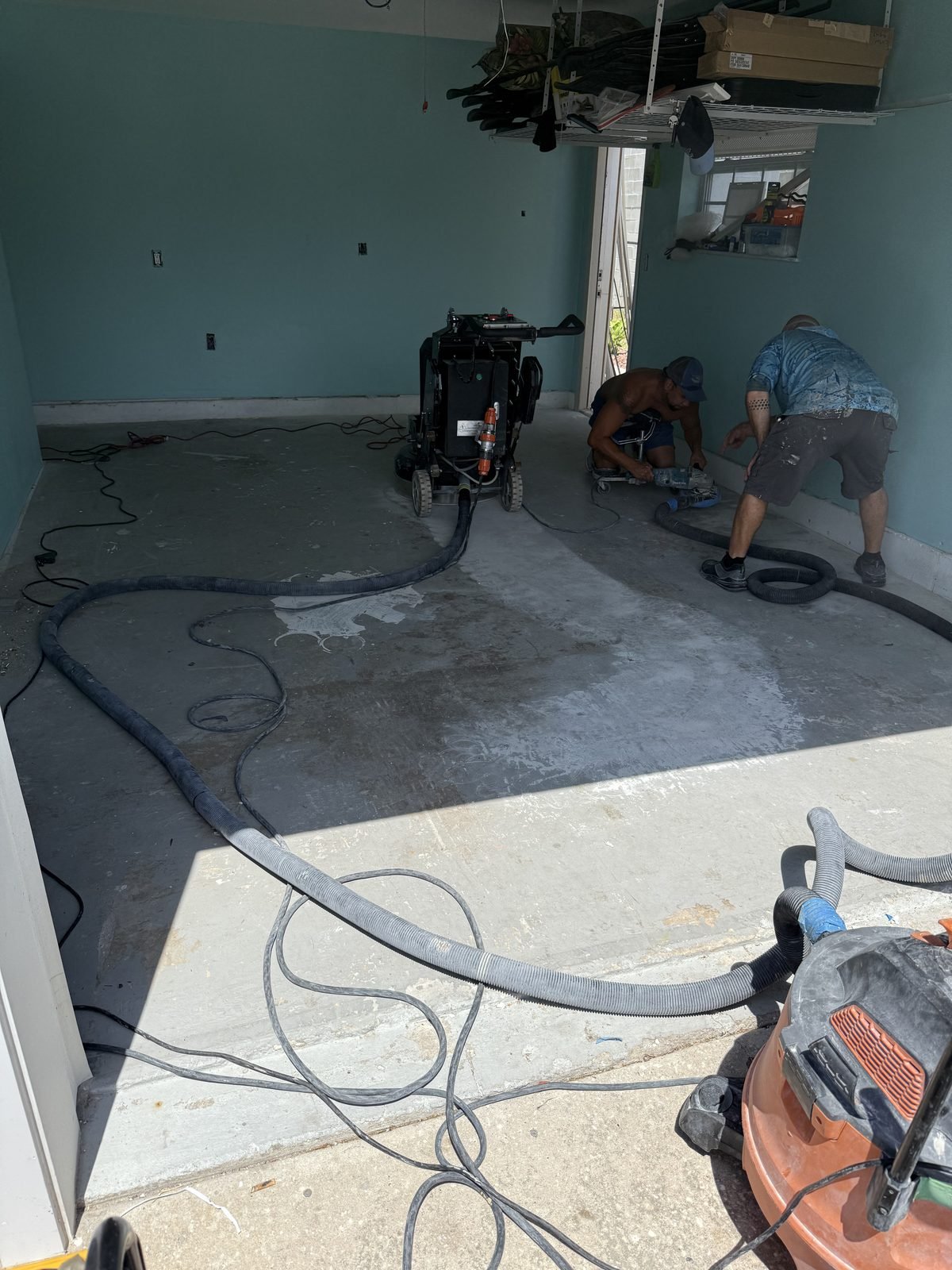
The biggest issue with DIY kits in Tampa Bay is surface preparation. These kits typically include an acid-etch solution that you mop onto the concrete. In dry climates, acid etching can create an adequate surface profile for a thin coating. In Florida, it's almost never sufficient. Our concrete absorbs so much moisture that acid etching doesn't create the mechanical bond profile needed for long-term adhesion. Professional installers use industrial diamond grinders or shot blasters that physically abrade the concrete surface, creating a consistent profile that the epoxy can grip.
We've lost count of how many Tampa Bay garages we've had to strip and redo after a DIY kit failed within the first year. The "savings" from DIY end up costing homeowners double when the floor has to be professionally redone.
The Installation Process: What Tampa Bay Homeowners Should Expect
Understanding the installation timeline helps you plan around the project and also lets you evaluate whether a contractor is cutting corners. Here's what a proper epoxy floor installation looks like in the Tampa Bay area.
Day 1: Assessment and Preparation
- Moisture testing — ASTM F2170 probes installed and read (readings take 24–72 hours for accurate results)
- Concrete inspection — Checking for cracks, spalling, prior coatings, oil stains, and surface contaminants
- Diamond grinding — The entire surface is mechanically ground to create a consistent CSP-2 or CSP-3 profile
- Crack and joint repair — All control joints and cracks are filled with flexible polyurea filler
- Dust removal — Industrial vacuums remove all grinding dust from the surface and pores
Day 2: Coating Application
- Primer/moisture mitigator (if needed based on ASTM F2170 results)
- Base coat application — 100% solids epoxy applied at proper mil thickness
- Broadcast media — Decorative flake, quartz, or metallic pigments applied while base coat is wet
- Cure time — Base coat must cure fully before topcoat (typically 12–24 hours depending on temperature and humidity)
Day 3: Topcoat and Completion
- Scrape and prep — Excess broadcast media is scraped flat and the surface is prepped for topcoat
- UV-stable topcoat — Polyaspartic or polyurethane clear coat applied for UV, abrasion, and chemical resistance
- Cure time — Light foot traffic typically allowed after 24 hours; vehicle traffic after 72 hours (longer in humid conditions)
Total timeline: 3–5 days from start to vehicle traffic, depending on humidity levels, concrete condition, and whether moisture mitigation is needed. Be skeptical of any contractor promising a "one-day" epoxy installation in Tampa Bay — proper cure times in our humidity simply don't allow it without compromising the system.
Choosing the Right Epoxy System for Your Tampa Bay Home
Not every epoxy system is the right fit for every application. Here's how to think about the options based on where you live and how you use the space.
Garage Floors
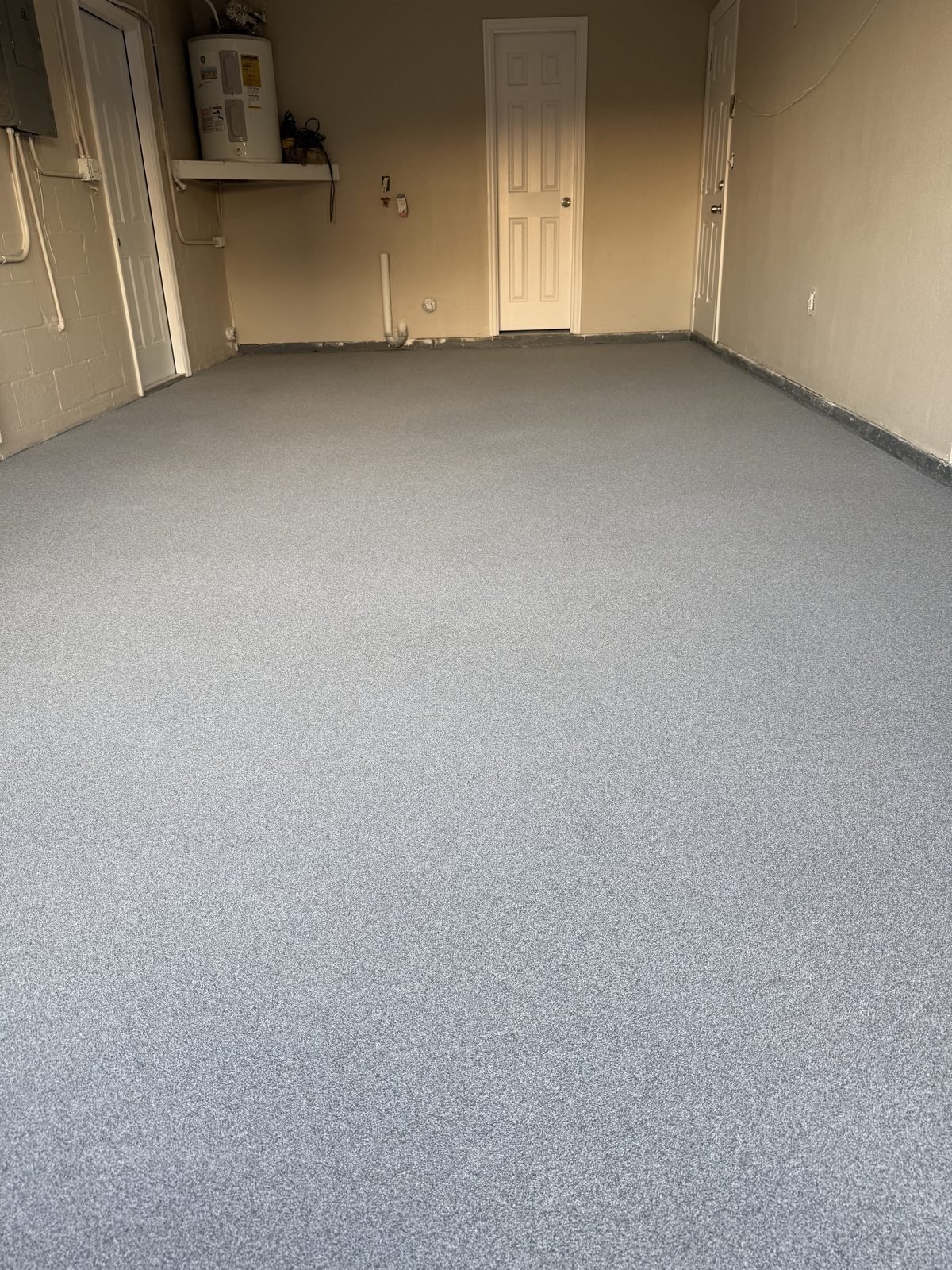
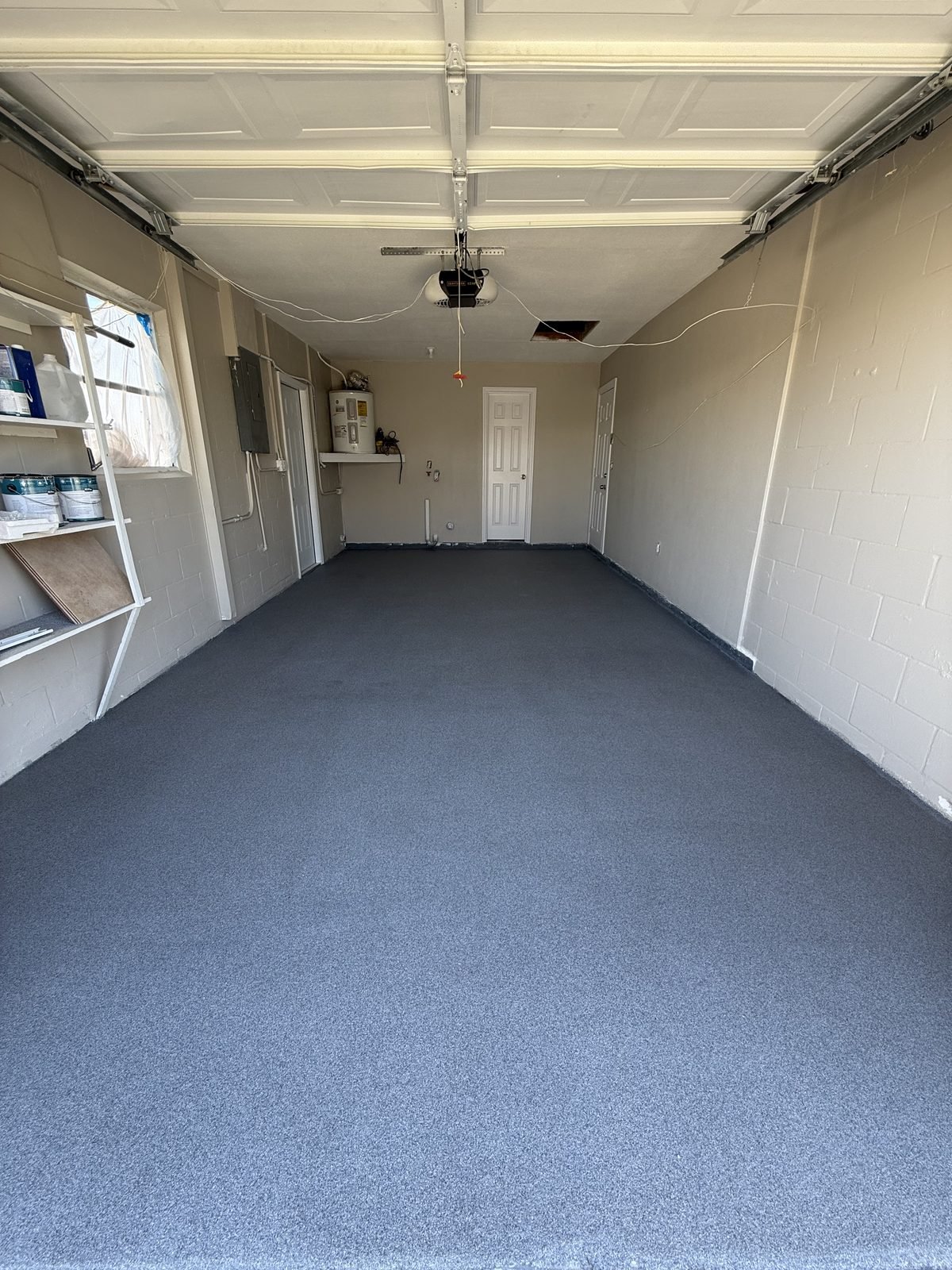
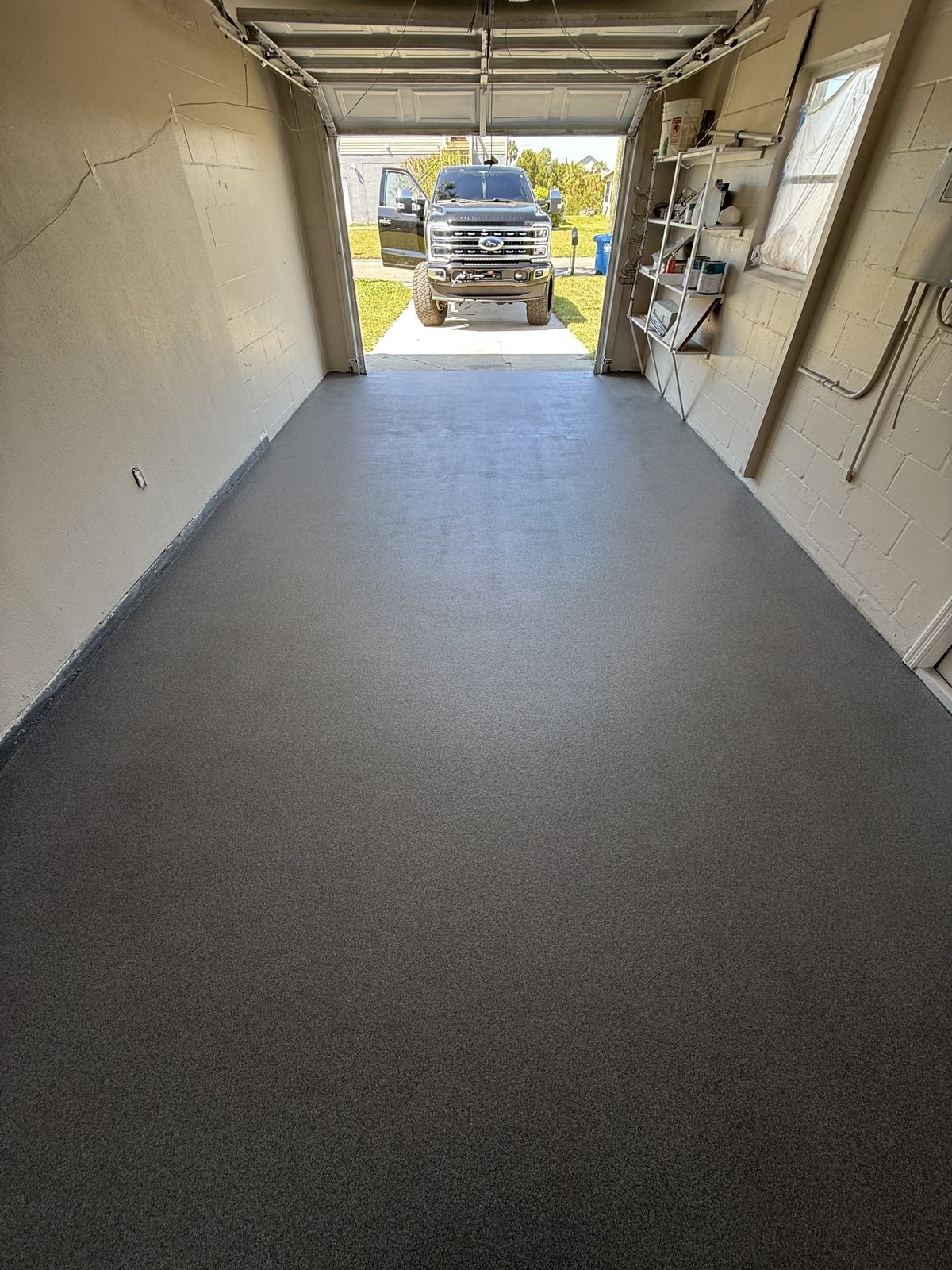
For most homeowners in Tampa, St. Petersburg, Clearwater, Brandon, and Riverview, a decorative flake epoxy system is the most popular and practical choice for garage floors. The multi-color flake pattern hides minor imperfections, provides excellent slip resistance (critical when you're walking on a wet surface after a Florida rainstorm), and offers the best value for the investment. It's the workhorse of the epoxy flooring world.
If you're looking for something more upscale — think car enthusiast showroom or a garage that doubles as entertaining space — a metallic epoxy system creates a one-of-a-kind, flowing design that resembles polished marble or molten metal. These systems are particularly popular with homeowners in Wesley Chapel and the newer communities north of Tampa who are building custom homes with oversized garages.
Outdoor Areas: Lanais, Pool Decks, and Driveways
Tampa Bay's outdoor living spaces need a different approach. Standard epoxy isn't formulated for full outdoor UV exposure and standing water. For lanais, pool decks, patios, and walkways, we use dedicated outdoor coating systems — typically polyaspartic or polyurea-based — that are fully UV-stable, slip-resistant when wet, and flexible enough to handle Florida's thermal expansion cycles (concrete expands and contracts significantly between our cool winter mornings and 95°F summer afternoons).
Interior Living Spaces
Epoxy and polished concrete are increasingly popular for interior living spaces in Tampa Bay homes, especially in modern and contemporary designs. The seamless, easy-to-clean surface is ideal for Florida's lifestyle — no grout lines to trap sand and dirt tracked in from the beach, no carpet fibers to harbor allergens and humidity-driven mold. For interior applications, we typically recommend polished concrete or a thin-mil epoxy system with a satin or matte finish for a more residential aesthetic.
Maintenance Tips for Epoxy Floors in Tampa Bay
One of the biggest advantages of epoxy flooring in Tampa Bay's climate is how little maintenance it requires. Here's how to keep your floor looking its best for decades.
- Regular sweeping or dust mopping — Florida's sandy soil gets tracked inside constantly. A quick sweep prevents grit from dulling the surface over time.
- Damp mopping — A flat microfiber mop with warm water and a pH-neutral cleaner is all you need. Avoid harsh chemicals, bleach, or citrus-based cleaners that can cloud the topcoat.
- Spill cleanup — Epoxy is chemical-resistant, but wipe up oil, gas, brake fluid, and battery acid promptly. The topcoat protects against staining, but prolonged exposure to harsh chemicals can dull the gloss.
- Avoid abrasive pads — Don't use steel wool or abrasive scrubbing pads. A soft-bristle brush handles any stubborn spots.
- Tire marks — If you notice tire marks (unlikely with a proper topcoat), they typically wipe away with a damp cloth and mild degreaser.
- Annual inspection — Check for any chips at edges, transitions to other flooring, or near heavy equipment. Minor touch-ups are easy and inexpensive.
With this basic maintenance routine, your epoxy floor will maintain its gloss, color, and structural integrity for 15–20+ years — even in Tampa Bay's demanding climate.
Why Proven Surfaces for Your Tampa Bay Epoxy Floor
At Proven Surfaces, we're not a franchise or a national chain sending out subcontractors. Owner John McGuire is on every project, and our team installs epoxy flooring systems across the entire Tampa Bay region — from Spring Hill and Wesley Chapel south through Tampa and Brandon, across the bay to St. Petersburg and Clearwater, and down through Riverview and the surrounding communities.
We use only commercial-grade, 100% solids epoxy systems — the same products used in hospitals, aircraft hangars, and automotive dealerships. Every installation includes ASTM F2170 moisture testing, industrial diamond grinding, and a UV-stable polyaspartic topcoat. We don't cut corners because we've seen firsthand what happens when someone does — and we refuse to put our name on a floor that won't last.
If you're ready to discuss your project, call us directly at (727) 463-3174 or request a free consultation online. We'll come to your home, test your concrete, and give you an honest assessment of what your floor needs — no pressure, no upselling, just straight talk from people who do this every day.
Frequently Asked Questions
How much does epoxy flooring cost in Tampa Bay?
Professional epoxy flooring in Tampa Bay typically costs between $5 and $12 per square foot, depending on the coating system, condition of the existing concrete, and the level of preparation required. For a standard two-car garage (400–600 sq ft), most Tampa Bay homeowners invest between $1,800 and $4,500. Decorative flake systems fall in the mid-range, while premium metallic epoxy systems cost more. Always request an on-site assessment, as concrete condition and moisture levels can affect final pricing.
Is epoxy flooring good for Florida's humidity?
Yes — when installed correctly, epoxy flooring is one of the best options for Florida's high-humidity environment. A properly applied epoxy system seals the concrete surface against moisture vapor transmission (MVT), preventing mold growth, efflorescence, and coating delamination. However, proper moisture testing using the ASTM F2170 in-situ relative humidity probe method is critical before installation. Tampa Bay's water table is high, and skipping this step is the number-one reason epoxy floors fail in Florida.
How long does epoxy flooring last in Tampa's climate?
A professionally installed epoxy floor in Tampa Bay will last 15 to 20+ years with proper maintenance. The key to longevity in Florida's climate is using a UV-stable polyaspartic or polyurethane topcoat. Standard epoxy alone will yellow and chalk when exposed to direct sunlight, which is a real concern for Tampa garages, patios, and lanais. A quality UV-stable topcoat protects the system from Florida's intense sun while maintaining gloss and color retention for decades.
Can epoxy flooring withstand Florida hurricanes?
Absolutely. Epoxy flooring creates a seamless, waterproof barrier across your entire floor with no grout lines, seams, or joints where water can intrude. During hurricanes and tropical storms, this seamless surface prevents water from penetrating beneath the coating and damaging the concrete substrate. After a storm, cleanup is simple — just squeegee or mop standing water off the surface. Unlike tile or carpet, there is nothing for floodwater to damage or for mold to grow beneath.
Ready to get started?
Get your free assessment and find out which coating system is right for your floor.
Get Your Free Assessment →